

A note on the numbers
Casa Domnaru is a local, hands-on business — we read this market from the actual Multiple Listing Service (MLS), the same data agents use, and refresh the figures in each edition. The boxes below mark where the current numbers go. Want them read for your own street, price range, and timeline? Ask us for a personal read — in English, Spanish, or Romanian.
What summer does to this market
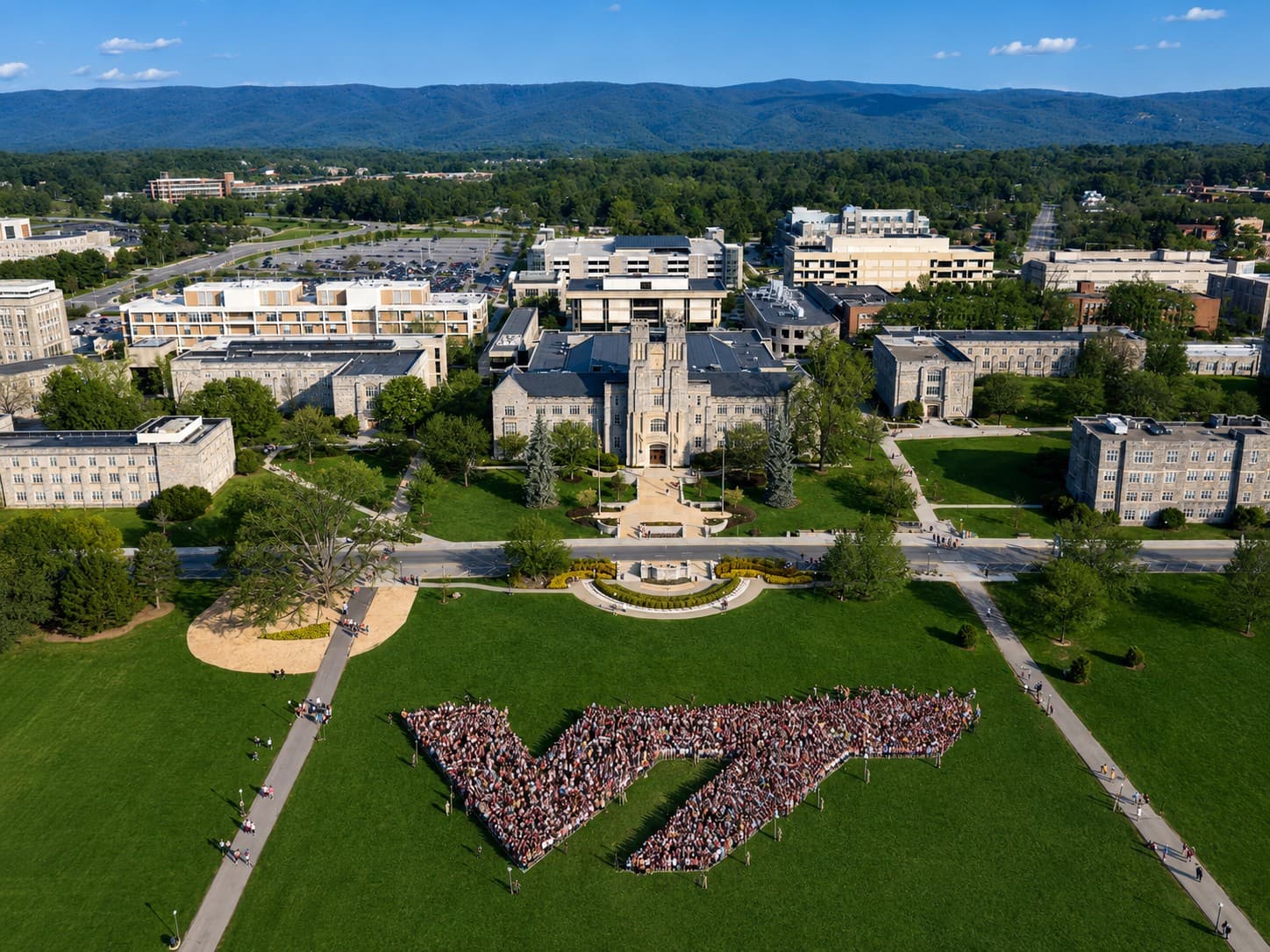
Most housing markets get busier in summer. The New River Valley does too — but here the rhythm is set by something unusual: two universities. Virginia Tech in Blacksburg and Radford University a few miles down the road pull a steady tide of faculty, staff, graduate students, and families in and out of the corridor every year, and almost all of that movement clusters in the warm months, before the fall semester begins. Add the families who want to be settled before the school year, and you get the single busiest stretch of the calendar from roughly late spring through August.
That has two sides. There are simply more homes for sale in summer than at any other time, so a buyer has the widest selection of the year. But there are also more buyers, many of them on a hard deadline tied to a job start or a school calendar, so the best-priced, move-in-ready homes can go quickly while everything else sits. It is busy and competitive at the same time, which is exactly why the numbers further down matter — they tell you which of those two forces is winning right now.
If you're buying this summer
Selection is on your side; time is not. A few things make the difference between getting the home you want and watching it go to someone else:
- Get fully pre-approved first, not just pre-qualified. In a fast summer, a seller choosing between two offers will take the buyer whose financing is already underwritten. A real pre-approval letter is what lets you act the day a home hits the market instead of a week later.
- Know your non-negotiables before you tour. When good homes move fast, the buyers who hesitate are usually the ones who never decided what actually matters to them — school zone, commute to campus, land, a shop, single-level living. Decide first; shop second.
- Town and country are two different races. In-town Blacksburg and Christiansburg near the university move fastest and tend to draw competing offers. Rural homes and land in Floyd, Giles, or out toward Pulaski move at a calmer pace, where your leverage is patience and a careful inspection rather than speed. Our rural-buying guide covers what to check before you fall for the view.
If you're selling this summer
This is your widest audience of the year — the most buyers, including the relocating university households who often pay close to asking for the right home because their timeline is tight. That window is real, but it rewards honesty, not optimism:
- Price to the market, not to the headlines. A busy season tempts sellers to reach. But summer buyers are seeing every comparable home at once, so an overpriced listing doesn't look bold — it looks skippable, and a stale listing loses the very urgency the season gives you. Our home-value guide explains how a real comparative market analysis is built.
- Be ready for the deadline-driven buyer. The household that has to be in before the semester is your best customer. Clean, photographed well, and easy to show beats clever every time.
- Mind the costs before you bank the gain. Commissions, your own next move, and seller-paid closing items all come out of the number you're picturing. Our cost-to-sell guide lays the real math out.
The four numbers that tell you which way it's leaning
You don't need a dashboard to read a local market. Four figures, taken together, tell you almost everything — whether it favors buyers or sellers, and whether it's speeding up or cooling off. Here's what each one means, and where this edition's New River Valley figure goes.
Median sale price
The midpoint of what homes actually sold for — half above, half below. It's steadier than an "average," which a single mansion or fixer can yank around. Watch the direction over several months, not one: a rising median across the summer says demand is outrunning supply. This edition's NRV median: figure updated from the MLS each edition.
Days on market
How long a typical home takes to go from listed to under contract. Falling days-on-market means homes are moving faster — a seller's signal. Climbing days-on-market means buyers have room to breathe. This edition's typical NRV days on market: figure updated from the MLS each edition.
Months of inventory
If no new homes were listed, how long it would take to sell everything currently for sale at the current pace. It's the single best buyer-vs-seller gauge: under about four months favors sellers, over about six favors buyers, and in between is balanced. This edition's NRV months of inventory: figure updated from the MLS each edition.
Sale-to-list price ratio
What homes sell for compared to what they were asking, as a percentage. Near or above 100% means buyers are paying full price or competing over homes; well below 100% means there's room to negotiate. This edition's NRV sale-to-list ratio: figure updated from the MLS each edition.
Why we read it in three languages
A market number means nothing until someone explains what it means for you — your budget, your timeline, the loan you qualify for. We do that in English, Spanish, and Romanian, because the families relocating to the New River Valley for a job at the university or the hospital don't all think in English, and a six-figure decision shouldn't happen in your second language if it doesn't have to. That's the whole idea behind Casa Domnaru: the same honest local read, in the language you actually live in.
Written by

Jesse Stidham & Emilia Domnaru
Founder & Co-founder, Casa Domnaru — Southwest Virginia
Last updated June 1, 2026